
SmartTraffic · GDPR · Digital Trust
Why Your Website Shows Zero Traffic – and How SmartTraffic Fixes It
A real GDPR-compliant tracking case that explains why “0 users” usually does not mean “no visitors”.
Published · · Smart Trades Training

Quick summary
- • Many websites show zero traffic even though users are visiting.
- • In most cases, GDPR cookie handling blocks analytics data.
- • This article shows a real SmartTraffic fix using CookieYes and GA4.
- • The result: clean, legal tracking and reliable data.
“Zero traffic” is usually a tracking problem
When local business owners see 0 users in Google Analytics, the first reaction is often frustration or confusion. But in many cases, the website is being visited — the data is simply blocked.
Under GDPR, analytics tools are only allowed to collect data after proper consent. If cookies are categorised incorrectly, analytics never fires — even though users are there.
The real SmartTraffic case
On our own website, Google Analytics showed no users at all. Traffic existed, but consent logic prevented tracking from starting.
What we checked
- Analytics category inside the cookie container
- CookieYes consent configuration
- Whether tags actually fire after consent
From problem to solution (visual overview)
Checking analytics settings inside the cookie container
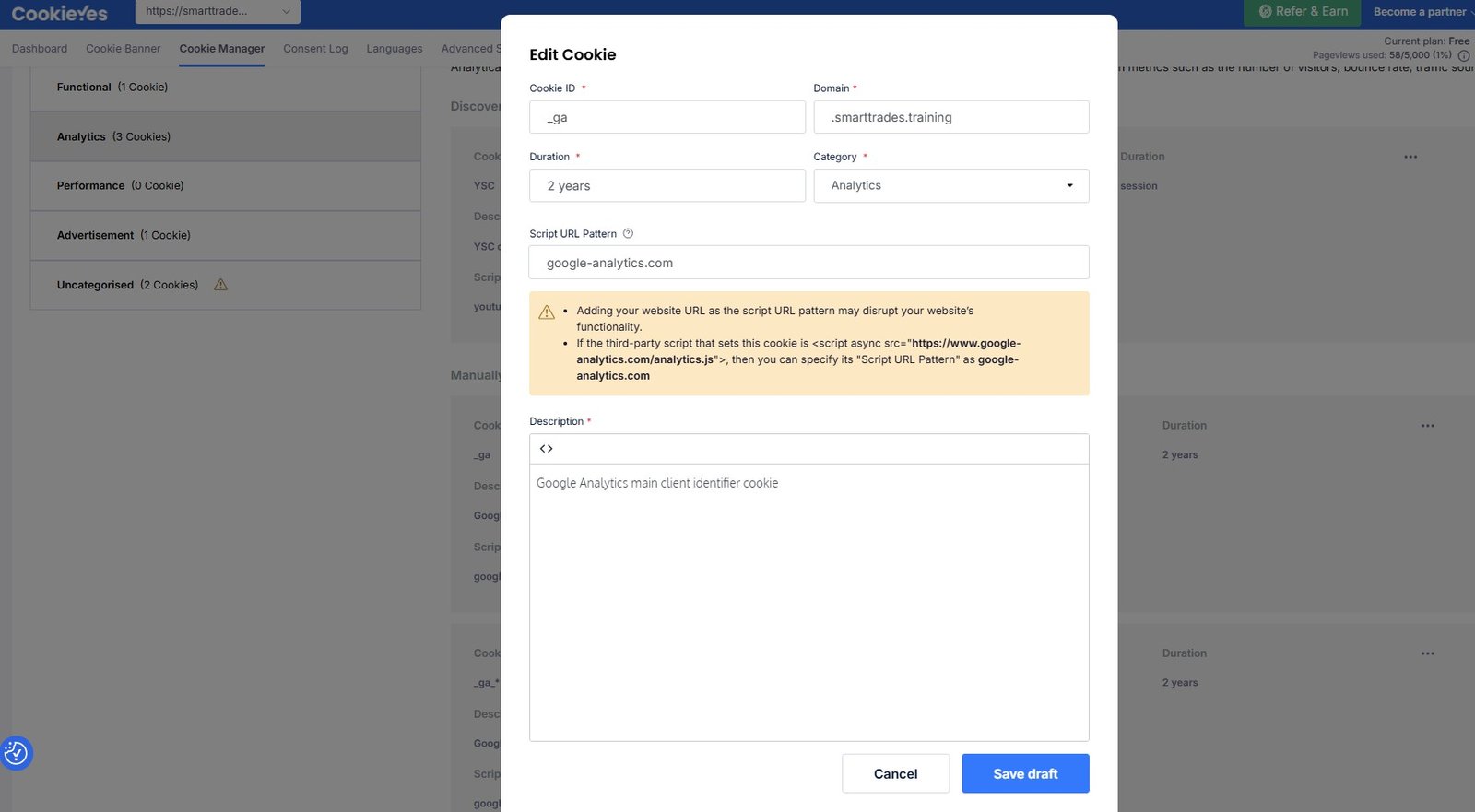
Adding and categorising cookies correctly in CookieYes
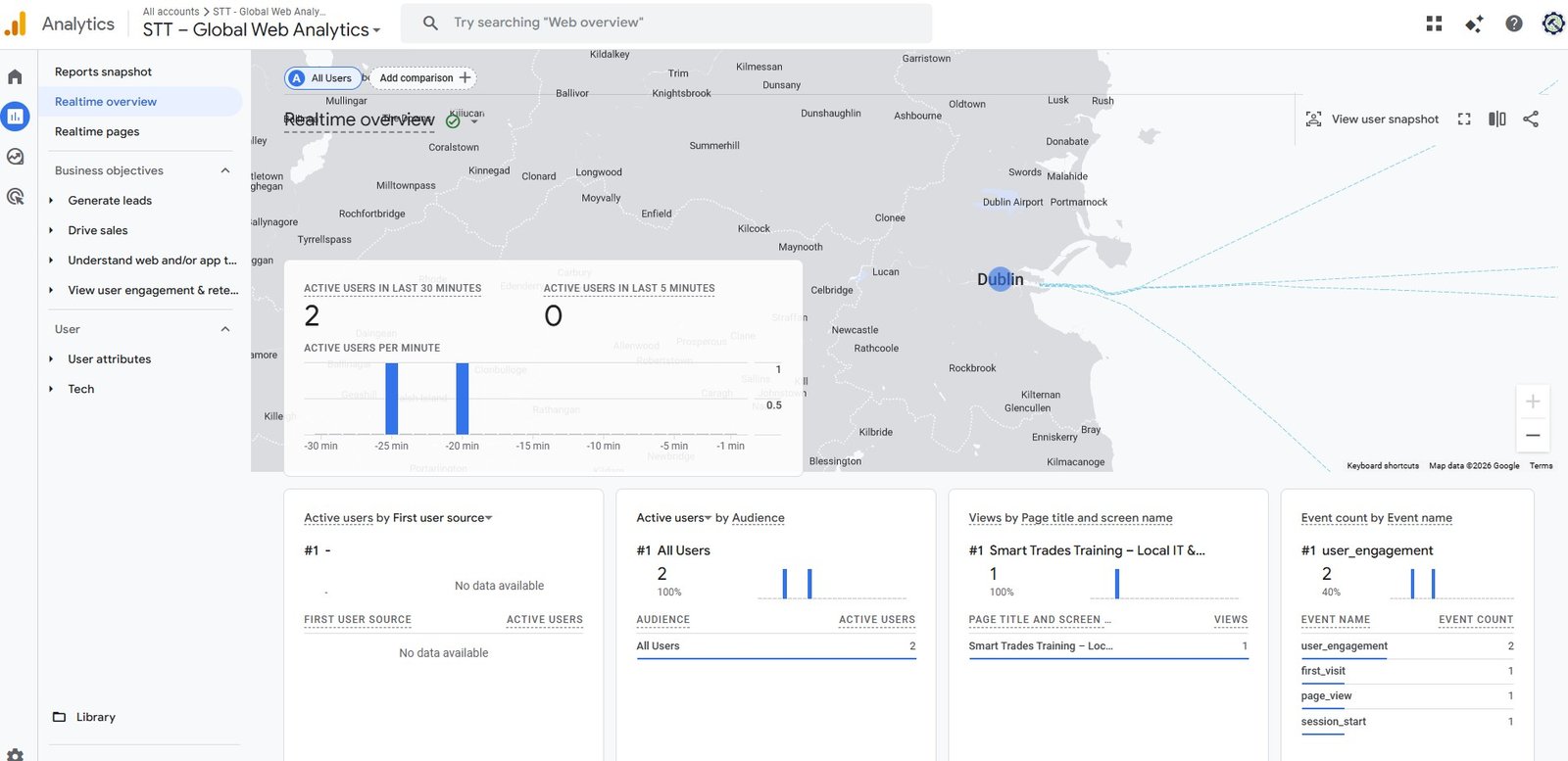
After the fix: analytics data appears in real time
Walkthrough video
Why this matters for local businesses
Without reliable analytics, business decisions are based on guesses. But tracking must also be legal and trustworthy.
SmartTraffic focuses on quality data — not vanity numbers. Correct tracking means understanding what works, what doesn’t, and where customers actually come from.
Questions people often ask
Does “0 users” mean my website has no visitors?
No. In many GDPR-based websites, it simply means analytics is blocked by consent settings.
Is this legal under GDPR?
Yes. The fix shown here is fully GDPR-compliant and respects user consent.
Can this affect any EU website?
Yes. Any website using consent-based tracking in the EU can experience this issue.